


FieldSaver®
Winter Turf Blankets & Growth Covers
Protect and grow sports field turf through winter. FieldSaver® covers increase growth yield by up to 78%.



Cart is Empty
Blog
A CoverSports Growth Cover Case Study
Featuring Greg Loberg, Volunteer Turf Manager — Pearland Little League
February 17, 2026
At Pearland Little League in southeast Texas, the infield grass has a story most fans would never expect. The Houston Astros re-turf their stadium throughout the season to offset wear from concerts and events, and the grounds crew donates surplus sod to local organizations. Pearland has been among the recipients since 2017, when the Astros removed Tal’s Hill — remember Daikin Park's quirky center-field incline? — and resodded the field, leaving extra rolls available for donation. It took 20 of those rolls to sod Pearland's Major Field infield all at once with Seashore Paspalum directly from that year's World Series championship field.
Receiving MLB-grade sod is only part of the equation. Keeping it healthy through unpredictable Texas winters, months before the active growing season, is the real test.
This responsibility falls to Greg Loberg, a volunteer who maintains the infields on his own time. Over the past six years, he has developed a winter maintenance program centered on one key tool: the Growth Cover.
Texas winters are deceptive. Daytime highs can reach 70°F, then plummet to freezing temperatures overnight. Seashore Paspalum grass doesn't truly start growing until overnight temperatures consistently hold near 70°, and in the Houston area, that typically doesn't happen until mid-May.
Pearland's Little League season opens in late February.
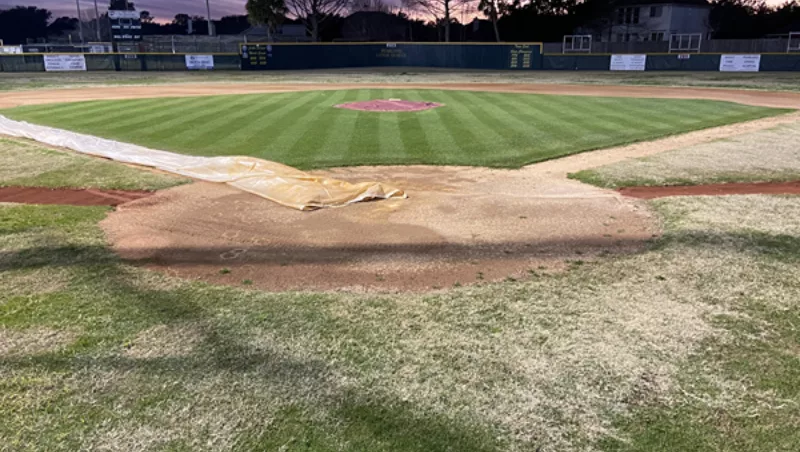
That three-month gap between the first practice and the first real growth creates a management problem familiar to turf managers across the South. Early-season practices chew up dormant grass. Coaches hit ground balls and create divots in turf that have no capacity to recover. By the time the growing season arrives, the damage is already done.
"Had the growth cover not been on the field, it would have been brown, dormant, and taking a beating from day one," he explained. "The cover gives the grass a cushion to survive that early use."
The idea didn't come from a catalog. It came from the Houston Astros.
Over the years, the Astros' grounds crew shared more than just sod. They taught Greg how to maintain Seashore Paspalum at a professional level, including how to keep it alive through winter. The Astros cover their own field during the offseason to protect the turf until spring re-sodding, and their head groundskeeper, Izzy Hinojosa, recommended that Pearland do the same with a growth cover.
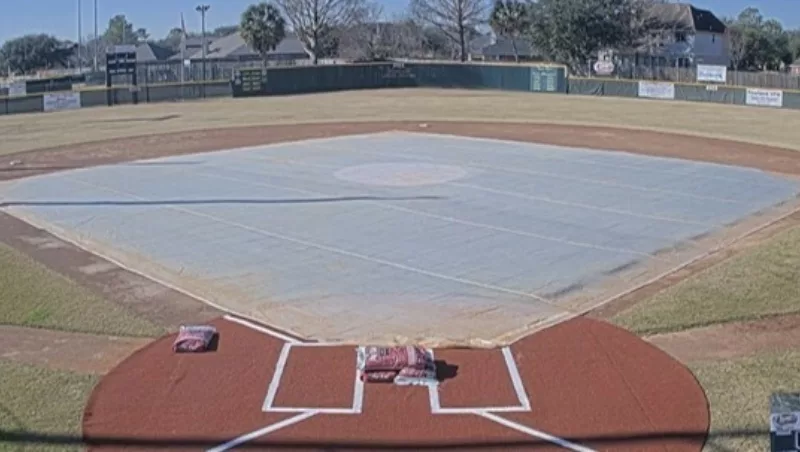
He purchased a CoverSports Growth Cover in 2020, sized to fit the 60-by-60-foot infield with about a foot of overlap onto the clay on every side. It's been in use every winter since.
The growth cover's value became impossible to ignore during the historic 2021 winter storm, the same storm that knocked out power across most of Texas.
The field was covered when the storm hit, but extreme winds got underneath one edge and pulled up stakes along the line from first to second base, peeling back a corner of the cover.
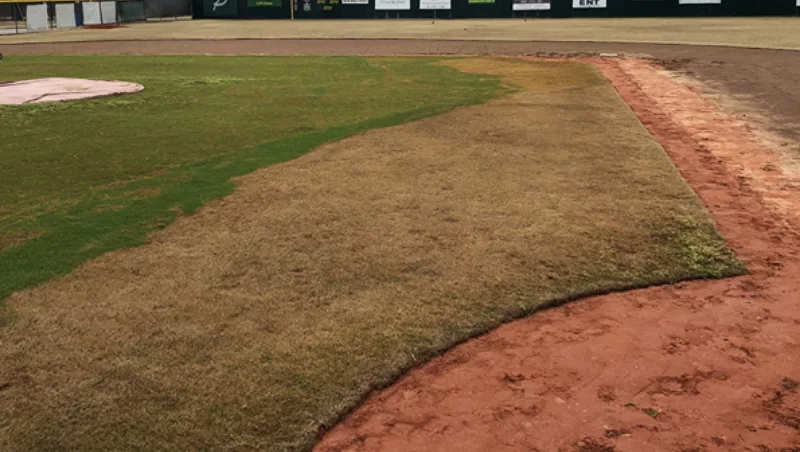
The result was a side-by-side comparison on the same field. "The area that stayed covered was still nice and green, but the area that was exposed to the weather, it had taken an impact. It went dormant," he recalled. "You could see the difference."
It was the most convincing proof point he could have asked for, and it happened entirely by accident. It also taught him some hard-earned lessons about proper staking and deployment.
One misconception about these covers is that they simply prevent damage. At Pearland Little League, the results go well beyond protection.
The grass doesn't just survive under the cover. It grows. Actively enough that it needs to be mowed in the middle of winter. "I have had to pull the blanket off and mow the field, and then put the blanket back," Loberg said. "I don't want to cut too much of the plant at one time." Mowing every two weeks during coverage periods is routine, something that would be unthinkable on an uncovered Texas field in January.
Root growth stays active. Turf density is maintained. The surface keeps its cushion, which matters for player safety and playability. When the cover comes off for the season opener in late February, the field is green, dense, and ready for action, months ahead of surrounding fields that are still brown and dormant.
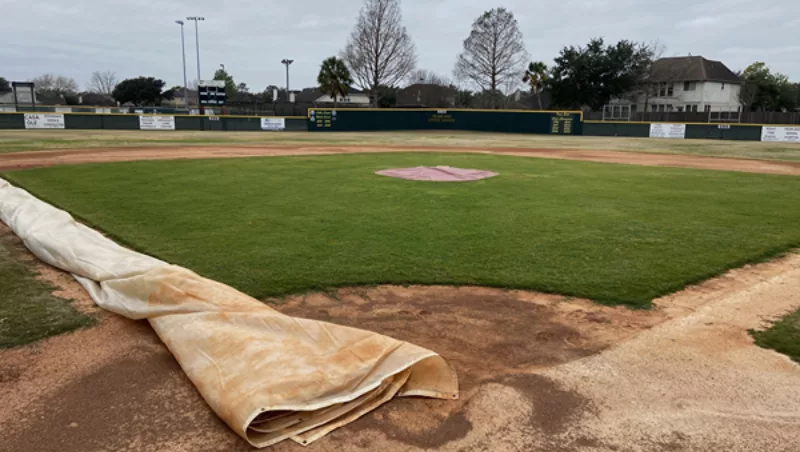
The league president, Troy Johnson, recognized the difference firsthand. After seeing the one covered field next to several uncovered ones during an early-season visit, he called it "a world of difference." His reaction was immediate: "Man, we need that on all our fields."
The growth cover is the centerpiece, but it works best as part of a broader winter maintenance routine. At Pearland, that program includes:
Pre-emergent herbicide is applied in the fall to prevent weed competition during dormancy.
Winter fertilizer with high potash (such as a 0-0-22 blend) to keep roots developing even when top growth slows.
Heavy topdressing in high-wear areas like baselines, the mound approach, and field edges provides an additional layer of insulation for the root zone.
Moisture management throughout winter, including targeted watering of wear-prone spots even while the cover is in place.
On warmer days when temperatures climb above 70, he occasionally pulls back three sides of the cover to let the warmer air get to it, then re-covers in the evening. It's a hands-on approach, but the payoff is a field that enters the season in playing condition rather than survival mode.
The CoverSports Growth Cover at Pearland is now in its sixth season of use. It shows minimal wear, but no loss in performance.
Loberg credits the cover’s longevity to tight installation. “I don't see much wear ... Flapping tears up windscreen. It tears up banners. Wind does damage,” he said. “The tighter you keep it, the longer it lasts.”
That matches what CoverSports customers see in the field: growth covers that are properly staked and tensioned consistently outlast those installed loosely. It’s not a disposable product. It’s an investment that delivers value season after season.
Today, Pearland Little League’s fields are the envy of the district. “Everybody wants to come to Pearland now,” Loberg said. “We host all the district tournaments.” No other facility in the area matches the quality, and it shows. “Some of the all-star teams come back and say, ‘Oh my gosh, our fields are so much better.”
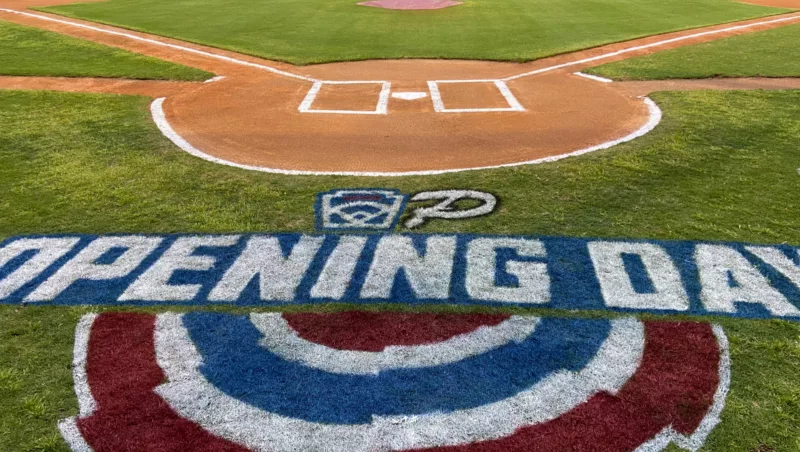
The league has also secured the bid to host the Texas East State baseball tournament for the next two years. The condition and quality of the turfgrass played a big role in that decision.
Over six seasons, Loberg has refined a solo deployment process that is efficient and repeatable.
He deploys the cover in reverse order from how he stores it. Starting at home plate, he unrolls it towards first base, then unfolds it across the infield toward second and third, unhalving it section by section until the full cover is spread across the field. He places initial stakes at the four corners and midpoints, setting them loosely without tension. From there, he begins adding tension at first-base, pulling away from second base, then working down the first-base line toward home. He continues along the third-base line, and finishes by tightening around second base. As he goes, he re-seats every stake to lock in tension.
Every hole gets a stake. No exceptions. Skipping even a few invites wind damage, as the 2021 storm made clear.
He also recommends using a hammer. Hand-pushing stakes into the ground does not set them deep enough. A small hammer drives them securely into the soil and helps the cover stay anchored during strong winds.
On breezy days, he suggests staking down the side facing the wind first.
Gloves are a must, and patience helps. One person can handle the job, but it involves plenty of walking and bending. Two people working the same side, rather than opposite sides, can cut the time significantly.
Above all, tension matters. "It's got to be nice and tight," Loberg said. Flapping is what causes wear over time and shortens the life of the cover. Getting the cover tight across the entire surface is the single most important factor in long-term performance.
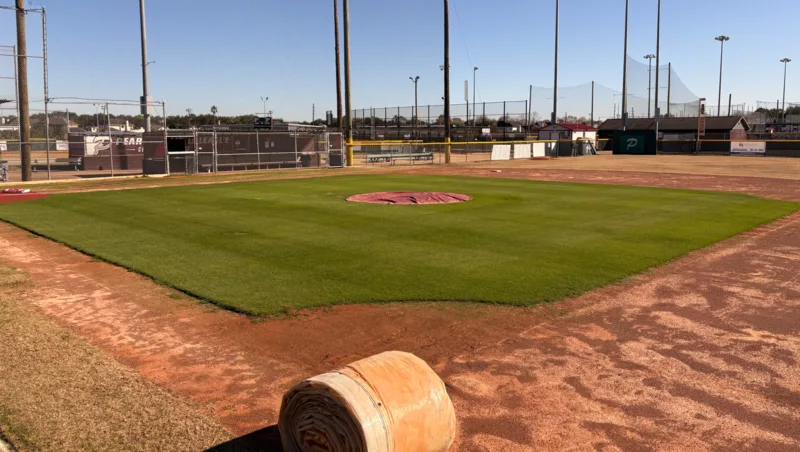
You don't need a professional grounds crew, a stadium budget, or northern winters to benefit from a growth cover. Pearland Little League proves it. A single CoverSports Growth Cover combined with smart winter maintenance has transformed a volunteer-run community ballpark into one of the best playing surfaces in Texas youth baseball.
The grass keeps growing through the winter. The field is ready weeks before the season starts. Six years later, the same cover is still doing its job.
For any turf manager wondering whether a growth cover is worth the investment, Pearland has the answer right there in the infield: green, dense, and game-ready in February.
Want to see what a Growth Cover can do for your facility? Contact us for a custom quote or to request a sample.
Protect and grow sports field turf through winter. FieldSaver® covers increase growth yield by up to 78%.

Designed to protect your baselines from moisture and rain, keeping players safe and gameplay smooth.
Weighted and grommeted pitching mound covers, home plate tarps, and base covers. Durable polyethylene or 18 oz. vinyl. Custom logo printing.
CoverSports
5000 Paschall Avenue
Philadelphia, PA 19143, USA


