


Field Guide
Baseball Field Protection: Expert Tips for Maintaining & Storing Baseball Field Tarps
September 09, 2025

Maintaining your baseball field tarp is essential for long-term protection of your baseball field. Whether you manage a school athletic program, a community field, or a sports complex, proper care ensures your baseball field covers stay strong throughout every season. From wind and water management to smart storage, these professional tips will help you safeguard your investment and keep your field game-ready all year.
1. Secure Against Wind: Plan, Anchor, and Rotate
Wind is the number one cause of tarp damage. Even moderate gusts can lift an unsecured baseball field cover, causing tears or dangerous whipping. Proper anchoring is critical for both safety and durability.
- Secure every grommet point with heavy-duty stakes, sandbags, or specialized tarp anchors.
- For full infield tarps, distribute anchors evenly to prevent flapping and weak points.
- Use weighted hem tarps for smaller areas like the mound, bases, or home plate. These eliminate the need for external weights and offer faster deployment with excellent wind resistance.
2. Water Management: Prevent Pooling and Weight Strain
Standing water is one of the biggest threats to baseball field covers. Pooling can add hundreds of pounds, straining both the tarp and your maintenance crew.
- After rainfall, remove excess water using a soft roller, push broom, or wide squeegee.
- Always wear soft-soled shoes to prevent punctures.
- Using the "tenting" method, place a cone or bucket under the tarp's center to guard against water runoff naturally.
Keeping your field tarp dry not only prevents damage but also reduces the labor before redeployment.
3. Clean and Protect the Underside
A dirty tarp degrades faster. dirt, cleat marks, and debris wear down material fibers and lead to early tearing.
- Clean your baseball field tarp regularly with a soft brush or broom.
- Flip sections for better access to the underside.
- Let rainfall assist with natural cleaning by briefly inverting the tarp outdoors.
Always dry thoroughly before rolling to prevent mold and mildew. Regular cleaning keeps your field looking professional and your tarp performance-ready.
4. Repair and Inspect Frequently
Small rips can quickly become large, expensive problems. Perform monthly inspections, especially after strong winds or storms.
- Patch holes immediately with rounded-corner repair tape on both sides of the fabric.
- Clean and dry the area before applying any adhesive.
- Keep a repair log to forecast replacement timelines and budget effectively
5. Smart Storage: Roll It Right, Cover It Tight
When it comes to storage, folding is your tarp’s worst enemy. Repeated creases lead to weak points and premature failure.
- Always roll, don’t fold your baseball field cover.
- Use a wide-diameter tarp roller (made from heavy-duty PVC or culvert piping) to prevent tight bends.
- Store your rolled tarp off the ground to protect against moisture, mold, and pests.
For added protection, use a UV-blocking storage cover and store indoors or in shaded, well-ventilated spaces. This shields your tarp from sunlight and temperature fluctuations, significantly extending its lifespan.
6. Small Area Tarps: Targeted Protection for High-Wear Zones
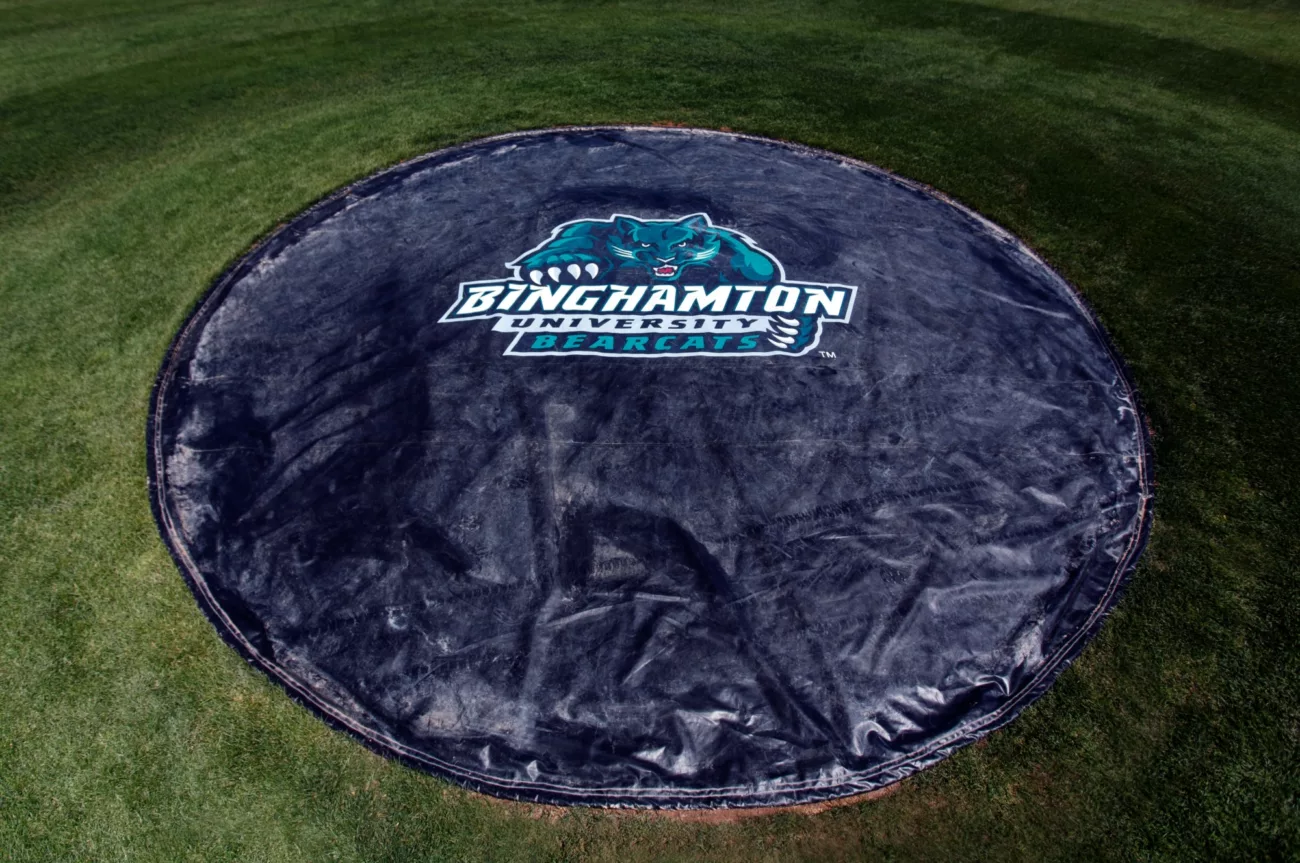
Small area baseball field covers are key to maintaining specific parts of the field. Protecting the mound, bases, and transition zones helps preserve clay moisture and reduce wear.
- Use mound and base covers to retain infield moisture during dry spells.
- Deploy skin tarps over baselines or skinned infields for broader coverage.
- Install infield collar protectors where turf meets dirt to minimize cleat damage and turf thinning.
These targeted covers offer affordable, high-impact baseball field protection for daily maintenance needs.
For more detailed information about the care of your baseball field tarp, contact us.
FAQ: Baseball & Softball Field Tarp Care
How many people are needed to deploy a full infield tarp?
For a regulation-size tarp (around 170′ × 170′), you’ll need at least 6–8 people working together. Larger crews of 10–12 make deployment faster and safer, especially in windy conditions. Having a trained “tarp crew” with assigned roles ensures smooth handling and prevents stress on handles and seams.
How long can a quality infield tarp last?
The lifespan depends on the material and care. A premium vinyl infield tarp can last 7–10 seasons if properly cleaned, rolled, and stored. Lightweight polyethylene tarps usually last 3–5 seasons, while basic economy tarps may only hold up for 1–2 years. Regular inspection, prompt repairs, and UV-protective storage covers extend longevity.
What is the best way to store a baseball field tarp between seasons?
The best practice is to roll, not fold. Use a large-diameter tarp roller (28″–40″ wide) made of heavy-duty PVC or culvert piping to avoid sharp creases. Always clean and dry the tarp before storage to prevent mold and soil buildup. Store it off the ground, in a shaded or indoor space, and use a UV-resistant storage cover for added protection.
CoverSports
5000 Paschall Avenue
Philadelphia, PA 19143, USA

